
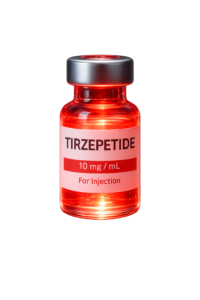
Tirzepatide weight loss results have generated more clinical and public attention than almost any pharmaceutical development in recent memory — and for good reason. In landmark Phase 3 trials, adults with obesity lost an average of 20% or more of their initial body weight over 72 weeks, a level of weight reduction once achievable only through bariatric surgery. But what does that mean for a real patient starting treatment today? What does the weight loss timeline actually look like week by week, month by month? And what separates patients who achieve exceptional results from those who plateau?
This guide answers all of those questions with precision — drawing on the full body of Phase 3 clinical evidence, including the pivotal SURMOUNT trial program and the landmark 2025 head-to-head SURMOUNT-5 trial — while offering practical context to help patients and clinicians set realistic, evidence-based expectations from the very first injection.
Contents
What Makes Tirzepatide Different for Weight Loss?
“
Tirzepatide — A once-weekly injectable dual GIP/GLP-1 receptor agonist, also called a “twincretin,” that simultaneously activates two metabolic hormone pathways to suppress appetite, enhance satiety, and improve insulin sensitivity. Marketed as Mounjaro for type 2 diabetes and Zepbound for weight management and obstructive sleep apnea.
How Tirzepatide Drives Weight Loss
When tirzepatide is injected subcutaneously once weekly, it binds to and activates both the GIP receptor and the GLP-1 receptor throughout the body. The integrated effect includes:
- ✦Sustained appetite suppression — central nervous system signaling that blunts hunger throughout the day
- ✦Prolonged meal satiety — patients feel full faster, stay full longer, and eat fewer total calories without conscious restriction
- ✦Slowed gastric emptying — moderating the rate of caloric absorption after meals
- ✦Reduced food reward signaling — diminishing cravings for calorie-dense and ultra-processed foods
- ✦Improved insulin sensitivity — supporting healthier fat metabolism in peripheral tissues
- ✦Elevated adiponectin levels — an anti-inflammatory hormone typically suppressed in people with obesity
Critically, tirzepatide does not simply suppress appetite through a blunt stimulant mechanism — it recalibrates the hormonal signals that govern hunger and satiety in a way that most patients describe as natural-feeling. Many patients report that they simply feel less interested in food — not nauseated or sick, but genuinely less hungry, with no particular craving driving them toward overconsumption.
Clinical Trial Results: The SURMOUNT Program
The SURMOUNT clinical trial program is the largest and most rigorous evaluation of tirzepatide’s weight loss efficacy ever conducted. Four major SURMOUNT trials have been completed or are ongoing, with SURMOUNT-1 serving as the pivotal registration trial for the Zepbound weight management indication.
SURMOUNT-1: The Landmark Trial
SURMOUNT-1 enrolled 2,539 adults with a BMI of 30 or higher (or 27+ with at least one weight-related comorbidity), but without type 2 diabetes. Participants were randomized to tirzepatide at 5 mg, 10 mg, or 15 mg once weekly, or placebo, for 72 weeks alongside a reduced-calorie diet and physical activity protocol.
−16.5% Mean weight loss | −19.5% Mean weight loss | −22.5% Mean weight loss | 57% Achieved ≥20% loss |
| Dose | Mean % Reduction | Absolute Lost | ≥5% Loss | ≥20% Loss |
|---|---|---|---|---|
| Placebo | −2.4% | ~5–6 lbs | 35% | 3% |
| 5 mg | −16.5% | ~35 lbs | 89% | 28% |
| 10 mg | −19.5% | ~42 lbs | 89% | 45% |
| 15 mg | −22.5% | ~52 lbs | 91% | 57% |
Source: SURMOUNT-1 Phase 3 trial, 72 weeks. All active doses vs. placebo, P<0.001.
To put these numbers in context: before the GLP-1 era, FDA-approved anti-obesity medications routinely produced reductions in the 5–8% range. Surgical interventions like sleeve gastrectomy typically produce 20–30%. Tirzepatide at 15 mg produced outcomes that fall squarely within the surgical range — through a once-weekly injection.
SURMOUNT-2: Patients with Type 2 Diabetes
SURMOUNT-2 evaluated tirzepatide in patients with both obesity and type 2 diabetes — a population in whom weight loss is typically more difficult. Even in this more challenging population, tirzepatide 15 mg produced an average weight reduction of approximately 15.7% over 72 weeks — still far exceeding the results achievable with any previously available pharmaceutical intervention.
SURMOUNT-3: After Intensive Lifestyle Intervention
SURMOUNT-3 examined tirzepatide in patients who had already lost at least 5% of body weight through intensive diet and exercise. Participants who transitioned to tirzepatide 15 mg lost an additional 18.4% over 72 weeks — demonstrating robust additional weight loss even in patients who had already made significant lifestyle-driven progress.
SURMOUNT-4: Sustained Weight Loss at 4 Years
SURMOUNT-4 followed patients for four years of continuous tirzepatide treatment. Results demonstrated that meaningful weight loss was maintained throughout the full four-year period, with patients continuing to lose weight through approximately 18 to 24 months before stabilizing — without significant regain during continued treatment.
Tirzepatide Weight Loss Timeline: Month by Month
While individual results vary meaningfully — influenced by starting weight, dose, metabolic health, dietary habits, and physical activity — the SURMOUNT trial data provide a consistent picture of the tirzepatide weight loss trajectory.
Weeks 1–4 Starting Dose 2.5 mg Physiological adaptation. Early appetite reduction. Modest 1–5 lb loss. GI adjustment common. | Weeks 5–12 5 mg – 7.5 mg Titration Effects in earnest. 5–10% body weight loss. Fastest rate of reduction in the entire timeline. | Months 4–6 10 mg – 12.5 mg Upper Range Cross 10% threshold. Lab markers improve. First plateaus may emerge as the body adapts. | Months 6–18 15 mg Maintenance Continued loss at slower pace. Max 22.5% average not reached until week 72. Goals often met. |
Results by Dose: Does Higher Always Mean More?
“
Maximum Tolerated Dose: The highest dose a patient can take while experiencing acceptable side effects. Clinical trials used maximum tolerated doses — not fixed doses — recognizing that 10 mg or 12.5 mg may be the optimal dose for many patients, not necessarily 15 mg.
The dose-response relationship is real: higher doses consistently produced greater average weight reduction — 16.5% at 5 mg, 19.5% at 10 mg, and 22.5% at 15 mg. However, there are several important caveats:
- ✦Individual variability is substantial. Many patients achieve 20%+ weight loss at 10 mg or even 7.5 mg, while others at 15 mg may plateau at 12–15%.
- ✦Side effects increase with dose. GI adverse events are more frequent at 12.5 mg and 15 mg; some patients experience significantly better tolerability at 10 mg without a meaningful sacrifice in results.
- ✦Trials used maximum tolerated doses. Many patients counted in the 10 mg and 12.5 mg result categories were there because 15 mg was not their optimal dose — and their results were still exceptional.
The clinical takeaway: escalating to 15 mg is appropriate when the patient tolerates it well and continues to lose weight. Maintaining at 10 mg or 12.5 mg is equally appropriate when producing good outcomes with acceptable tolerability. The goal is not a number on the dose schedule — it is the best clinical outcome for each individual patient.
Tirzepatide vs. Semaglutide: How Do Results Compare?
The 2025 publication of the SURMOUNT-5 trial in the New England Journal of Medicine resolved this comparison definitively — the first randomized, controlled head-to-head trial directly comparing the two drugs in adults with obesity without type 2 diabetes.
| Outcome at 72 Weeks | Tirzepatide | Semaglutide |
|---|---|---|
| Mean body weight reduction | 20.2% | 13.7% |
| Absolute weight lost (average) | ~50 lbs | ~33 lbs |
| Patients achieving ≥15% loss | 64%+ | ~38% |
| Waist circumference reduction | 18.4 cm | 13.0 cm |
| GI discontinuation rate | 2.7% | 5.6% |
Source: SURMOUNT-5, NEJM 2025. P<0.001 for primary endpoint.
The 6.5-percentage-point difference in mean weight loss was statistically significant and clinically substantial — tirzepatide users lost approximately 17 more pounds on average than semaglutide users. Importantly, tirzepatide also demonstrated better GI tolerability in this direct comparison, despite its greater metabolic potency.
Factors That Influence Your Individual Results
Clinical trial averages are population-level statistics. Individual results exist on a wide spectrum — shaped by a constellation of biological, behavioral, and pharmacological factors.
◆Starting Body Weight A patient starting at 350 lbs losing 20% sheds 70 lbs vs. 40 lbs for a 200 lb patient. Both are clinically meaningful — never compare absolute numbers without accounting for baseline. | ◆Type 2 Diabetes Status SURMOUNT-1 (no T2DM): 22.5% average. SURMOUNT-2 (with T2DM): ~15.7%. The gap reflects diabetes’ metabolic complexity — still far superior to prior therapies. |
◆Dietary Habits The drug reduces the drive to overeat — the patient still makes choices within that reduced drive. High-protein, nutrient-dense eating consistently outperforms continued ultra-processed patterns. | ◆Resistance Training Preserves lean muscle during rapid weight reduction — supporting a higher resting metabolic rate and reducing the risk of rebound weight regain after treatment. |
◆Dose & Adherence Tirzepatide reaches steady-state over ~4 weeks of consistent weekly dosing. Missed injections disrupt drug levels and reduce the consistency of appetite suppression. | ◆Sleep Quality Sleep deprivation raises ghrelin and suppresses leptin — partially counteracting tirzepatide’s appetite suppression. Addressing sleep quality consistently improves outcomes. |
Understanding and Overcoming Weight Loss Plateaus
“
Weight Loss Plateau: A period during which body weight remains stable despite continued adherence, caused by the body’s adaptive metabolic response — including reduced basal metabolic rate, altered appetite hormone signaling, and increased metabolic efficiency of movement.
Weight loss plateaus on tirzepatide are not a sign that the medication has stopped working. They are a manifestation of the body’s powerful homeostatic mechanisms — the same biological forces that make obesity a chronic disease rather than a simple behavioral problem.
Why Plateaus Occur
- ✦Basal metabolic rate decreases — a smaller body requires fewer calories to maintain itself
- ✦Ghrelin (hunger hormone) levels tend to rise, partially counteracting tirzepatide’s appetite suppression
- ✦Movement becomes more metabolically efficient, reducing caloric expenditure per unit of activity
- ✦Unconscious caloric compensations — slightly larger portions, additional snacks — can offset the deficit
Strategies to Break Through a Plateau
- ✦Conduct a dietary audit. Track food intake honestly for 1–2 weeks. Caloric creep is the most common contributor and is often invisible without objective tracking.
- ✦Optimize protein intake. Increasing to 1.4–1.6 g/kg supports metabolic rate, preserves muscle, and reduces caloric intake through greater satiety.
- ✦Intensify resistance training. Creates additional caloric demand while preserving metabolically active lean tissue.
- ✦Review injection schedule. Even occasional delays create fluctuations in drug levels that affect appetite suppression consistency.
- ✦Discuss dose adjustment with your provider. Upward dose adjustment may restore weight loss momentum if not yet at maximum tolerated dose.
- ✦Allow time. Plateaus often resolve naturally within 4–8 weeks as the body’s adaptive responses reach equilibrium.
Benefits Beyond the Scale
Tirzepatide’s clinical impact extends well beyond what the scale records. The comprehensive metabolic improvements create a cascade of health benefits that are, in many ways, as important as the weight number itself.
♥ Blood Pressure Reductions of 5–10 mmHg in systolic blood pressure — associated with meaningful reductions in heart attack and stroke risk at the population level. | ◆ Lipid Profile Consistent reductions in triglycerides, LDL, and total cholesterol, with HDL increases — in both diabetic and non-diabetic patients. |
✦ Glycemic Control Improved fasting glucose and insulin sensitivity even in non-diabetic patients. Evidence suggests reduced progression from pre-diabetes to frank T2DM. | ☾ Sleep Apnea SURMOUNT-OSA data led to December 2024 FDA approval of Zepbound for obstructive sleep apnea — the first pharmaceutical treatment for OSA. |
Clinical trial measurements of health-related quality of life consistently showed statistically significant improvements across multiple validated instruments. Improvements in physical functioning, mobility, pain scores, and overall wellbeing were significantly greater in patients who lost more weight — demonstrating a dose-response relationship between the magnitude of weight loss and quality-of-life improvement.
Maintaining Weight Loss Long Term
One of the most important aspects of tirzepatide weight loss results to understand — and one frequently underemphasized at the point of prescription — is that results achieved during active treatment require ongoing treatment to sustain. This is not a flaw of the medication; it is a reflection of obesity’s nature as a chronic disease.
When tirzepatide is discontinued, the hormonal signals it modulates are removed. Studies on GLP-1 class medications consistently show that a significant proportion of weight lost during treatment is regained within one to two years of stopping, even among patients who maintained healthy lifestyle behaviors throughout treatment.
Long-term weight maintenance strategies worth discussing with your provider:
- ✦Continuing tirzepatide at the lowest effective maintenance dose rather than stopping entirely
- ✦Transitioning to another weight management medication if tirzepatide becomes inaccessible
- ✦Intensive dietary and behavioral intervention with close clinical follow-up at the point of discontinuation
- ✦Evaluation for bariatric surgery as a more permanent structural intervention, particularly for patients with severe obesity
Frequently Asked Questions
Conclusion: Setting Evidence-Based Expectations
Tirzepatide weight loss results are, by any measure, the most clinically impressive outcomes ever produced by a pharmaceutical weight management agent. An average of 20% body weight reduction over 72 weeks — with more than half of patients at the maximum dose achieving 20% or greater — represents a categorical leap beyond what was achievable with medication before the GIP/GLP-1 era.
Tirzepatide is a powerful tool that works best within a comprehensive treatment approach. Diet quality, protein intake, resistance training, sleep hygiene, and consistent medication adherence all influence how much of that clinical potential a given patient realizes. The drug opens a door to weight reduction that was previously inaccessible without surgery — how far you walk through that door depends on what you build around it.
Ready to Explore Tirzepatide?
If you believe tirzepatide may be appropriate for your weight management or metabolic health goals, the next step is a conversation with a qualified healthcare provider who can evaluate your medical history, prescribe and monitor the medication, and build a personalized treatment plan around the drug’s substantial clinical potential.