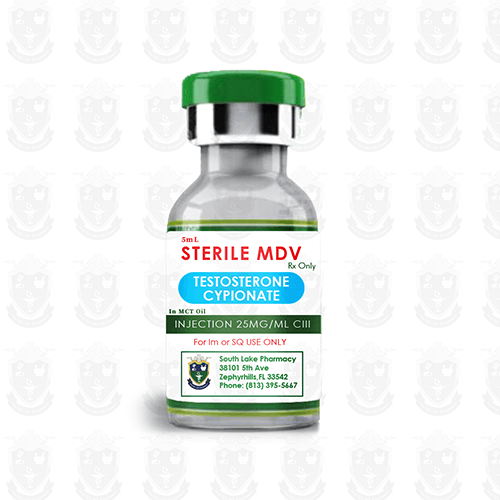
Testosterone Injection
Description
Testosterone Injections: How They Work, Types, and Results
Testosterone injections are the most widely prescribed and clinically proven form of testosterone replacement therapy (TRT) for men with low testosterone. Compared to gels, patches, and pellets, a testosterone injection delivers the most direct, predictable, and cost-effective rise in serum testosterone levels — which is why it remains the gold standard for treating hypogonadism, age-related testosterone decline, and the energy, mood, and sexual symptoms that come with low T. Whether you are exploring TRT for the first time, weighing testosterone cypionate against enanthate, or wondering how to safely self-inject at home, this comprehensive guide brings every important topic together in one place so you can have an informed conversation with your provider.
Most articles online cover only one slice of testosterone replacement therapy. You will find a piece on side effects, a piece on injection technique, a piece on dosage — but rarely a single resource that connects them. This guide is built differently. It explains how testosterone injections work in the body, walks through every common ester and how to choose between them, compares intramuscular versus subcutaneous injection, lays out a realistic dosage schedule, gives a step-by-step self-injection protocol, maps out a week-by-week results timeline, breaks down the side effects with practical management tips, addresses risks and contraindications honestly, explains the lab work you should expect, and finishes with the lifestyle habits that determine whether your results stick. Use the table of contents below to jump to whichever section matters most, or read straight through for the complete picture.
What Are Testosterone Injections and How Do They Work?
Testosterone injection: A bioidentical or synthetic form of testosterone, suspended in oil and bound to an ester (such as cypionate, enanthate, or propionate), administered into muscle or subcutaneous tissue to restore healthy testosterone levels in men with hypogonadism or clinically low testosterone.
Testosterone injections deliver exogenous testosterone — meaning testosterone that comes from outside the body — directly into the bloodstream through deep tissue. Unlike oral testosterone, which is largely broken down by the liver before it can act, injected testosterone bypasses first-pass metabolism and produces predictable, measurable increases in serum testosterone. This is why injections consistently outperform pills, gels, and patches in head-to-head comparisons of total testosterone elevation.
The Role of the Ester
The “ester” attached to the testosterone molecule controls how slowly the medication is released into circulation. A longer ester means a slower release, a longer half-life, and less frequent injections. A shorter ester means a faster spike and crash. The four most common esters used in clinical practice are cypionate, enanthate, propionate, and undecanoate — each with distinct release profiles, half-lives, and dosing schedules.
How Injected Testosterone Acts in the Body
- Restores androgen receptor signaling. Once in circulation, testosterone binds to androgen receptors in muscle, brain, bone, and reproductive tissue, restoring the signaling pathways that decline with age or hypogonadism.
- Converts to estradiol and DHT. A portion of injected testosterone is converted to estradiol (via aromatase) and dihydrotestosterone (via 5-alpha-reductase). Both metabolites are essential — estradiol supports bone health, mood, and libido, while DHT contributes to facial hair, prostate function, and androgenic effects.
- Suppresses the HPG axis. Exogenous testosterone signals the brain to reduce its own LH and FSH production, which shuts down endogenous testicular testosterone production. This is why long-term TRT often requires HCG or enclomiphene to preserve testicular size and fertility.
- Stimulates erythropoiesis. Testosterone increases red blood cell production. This is generally beneficial but requires monitoring, since hematocrit can rise too high in some patients.
Who Needs Testosterone Injections? Symptoms and Candidates
Testosterone injections are not for every man with fatigue or a flagging libido. They are a targeted treatment for clinically diagnosed low testosterone, a condition the medical community calls hypogonadism. Diagnosis requires both symptoms and confirmed low testosterone levels on lab work — typically two separate morning blood draws.
Common Symptoms of Low Testosterone
- Persistent fatigue and low energy that does not resolve with sleep or stress reduction
- Reduced libido and sexual desire — one of the most reliable symptoms
- Erectile dysfunction or weakened morning erections
- Loss of muscle mass and strength despite consistent training
- Increased body fat, particularly around the midsection
- Depressed mood, irritability, or “low motivation”
- Brain fog and reduced cognitive sharpness
- Poor sleep quality and reduced morning vitality
- Decreased bone density, increased fracture risk
- Reduced body and facial hair growth
- Hot flashes in cases of severely low testosterone
Lab Thresholds That Support a Diagnosis
Most clinical guidelines define low testosterone as a confirmed total testosterone level below 300 ng/dL on at least two early-morning measurements, taken between 7:00 and 10:00 AM when testosterone naturally peaks. However, the picture is more nuanced than a single number:
- Total testosterone below 300 ng/dL with symptoms is the standard threshold for treatment.
- Free testosterone (the unbound, biologically active fraction) below 65 pg/mL often warrants treatment even when total testosterone looks borderline.
- SHBG (sex hormone-binding globulin) can shift how meaningful a total testosterone number is — high SHBG can leave free testosterone low even when total looks acceptable.
- LH and FSH distinguish primary hypogonadism (testicular failure, high LH/FSH) from secondary hypogonadism (pituitary or hypothalamic issue, low or normal LH/FSH).
Who Tends to Benefit Most
Strong candidates for testosterone injections typically share a few features: confirmed lab evidence of low testosterone, clear symptoms that align with hypogonadism, no untreated contraindications, realistic expectations, and willingness to commit to ongoing lab monitoring. TRT is not a quick fix or a performance enhancer for healthy men with normal testosterone — used inappropriately, it carries real risks without the upside.