GHK-Cu peptide injection is one of the most well-researched and clinically compelling bioactive peptides available today. Short for glycyl-L-histidyl-L-lysine copper, GHK-Cu is a naturally occurring copper-binding tripeptide found throughout the human body — and its therapeutic applications span skin rejuvenation, hair restoration, wound healing, anti-inflammation, and even cognitive and cellular longevity. At South Lake Pharmacy, we compound pharmaceutical-grade GHK-Cu tailored to your provider’s specifications so you receive a consistent, high-quality product that meets the demands of modern peptide therapy.
What is GHK-Cu? GHK-Cu (glycyl-L-histidyl-L-lysine copper) is a naturally occurring tripeptide that binds copper ions to regulate tissue remodeling, wound healing, and cellular repair. Produced by the liver and released into plasma, GHK-Cu declines sharply with age — from approximately 200 ng/mL at age 20 to under 80 ng/mL by age 60 — making supplementation an area of growing clinical interest.
Whether you are exploring GHK-Cu for its dermatological benefits, its role in collagen synthesis, its neuroprotective properties, or its systemic anti-aging effects, this guide covers everything you need to know — including how it works, evidence-backed benefits, dosing protocols, potential side effects, and what to expect when sourcing compounded GHK-Cu from a licensed specialty pharmacy.
What Is GHK-Cu? Understanding the Copper Peptide Complex
GHK-Cu was first isolated and characterized in the early 1970s by researcher Loren Pickart, who identified it as a plasma factor capable of stimulating liver tissue regeneration. What began as a basic science curiosity has since become one of the most extensively studied peptides in the fields of dermatology, wound care, and regenerative medicine.
The molecule itself is elegantly simple: three amino acids — glycine, histidine, and lysine — linked together and chelated to a copper ion (Cu²⁺). Despite its small size, GHK-Cu exerts powerful biological effects by modulating gene expression. Studies have shown that GHK-Cu can upregulate or downregulate over 4,000 human genes, including those involved in inflammation, DNA repair, collagen synthesis, apoptosis, and antioxidant defense.
Why Copper Matters in This Peptide
Copper is an essential trace mineral required for dozens of enzymatic reactions in the body, including those that govern collagen cross-linking, superoxide dismutase (SOD) activity, and melanin synthesis. When GHK binds copper and delivers it to target tissues, it essentially functions as a biological chaperone — escorting the mineral where the body needs it most. This targeted copper delivery is what distinguishes GHK-Cu from standalone copper supplementation, which lacks this precision.
- GHK-Cu is a tripeptide naturally produced in the liver, skin, urine, and saliva
- Plasma concentrations decline from ~200 ng/mL in young adults to ~80 ng/mL by age 60
- It binds copper with extremely high affinity (Kd ~10⁻¹⁵ M), enabling targeted delivery
- GHK-Cu influences gene expression on a massive scale — regulating thousands of genes
- It is involved in activating the body’s natural wound healing cascade
- Research suggests it acts as a systemic signal of tissue injury that mobilizes repair resources
- GHK-Cu has been studied for topical, injectable, and intranasal delivery
How Does GHK-Cu Peptide Work at the Cellular Level?
Understanding how GHK-Cu works requires looking at the mechanisms that govern cellular aging, tissue repair, and systemic inflammation. The peptide operates through several distinct but interconnected pathways that together produce its wide-ranging therapeutic effects.
Gene Regulation and Transcription Factor Modulation
GHK-Cu is one of the few peptides known to significantly alter gene transcription. Dr. Pickart and colleagues analyzed its effects on the human genome using DNA microarray technology and found that it reversed the gene expression patterns associated with aging — downregulating pro-inflammatory pathways (including NF-kB signaling) and upregulating genes involved in tissue repair, growth factor production, and antioxidant defense.
Stimulation of Collagen and Glycosaminoglycan Synthesis
GHK-Cu directly stimulates fibroblasts — the cells responsible for producing collagen, elastin, and the glycosaminoglycans (GAGs) that make up the extracellular matrix. This is why so many dermatological applications of GHK-Cu center around skin rejuvenation: the peptide rebuilds the structural scaffolding that gives skin its firmness, bounce, and moisture retention.
Antioxidant and Anti-Inflammatory Activity
GHK-Cu potently inhibits free radical damage by upregulating superoxide dismutase (SOD) and other endogenous antioxidants. Simultaneously, it downregulates the expression of TNF-α, IL-6, and other pro-inflammatory cytokines that drive chronic, low-grade inflammation — the type increasingly linked to aging, metabolic disease, neurodegeneration, and cardiovascular risk.
Growth Factor Upregulation
One of GHK-Cu’s most powerful actions is the upregulation of key growth factors, including:
- Vascular Endothelial Growth Factor (VEGF) — promotes new blood vessel formation and tissue oxygenation
- Fibroblast Growth Factor (FGF) — accelerates fibroblast activity and collagen deposition
- Nerve Growth Factor (NGF) — supports neuronal health and regeneration
- Brain-Derived Neurotrophic Factor (BDNF) — plays a central role in learning, memory, and mood regulation
- Hepatocyte Growth Factor (HGF) — supports liver regeneration and repair
GHK-Cu Peptide Injection Benefits: What Does the Research Show?
The research base supporting GHK-Cu is extensive and spans multiple decades and therapeutic domains. Below, we outline the most clinically relevant and well-supported benefits associated with GHK-Cu peptide therapy.
1. Skin Rejuvenation and Anti-Aging
The skin benefits of GHK-Cu are among its most studied applications. As collagen production declines with age — beginning as early as the mid-20s — the extracellular matrix loses density and elasticity, producing visible signs of aging like fine lines, wrinkles, and sagging. GHK-Cu directly counteracts this process by stimulating fibroblasts to rebuild collagen and elastin.
- Increases skin collagen density and thickness
- Reduces the appearance of fine lines and deep wrinkles
- Improves skin firmness, tone, and elasticity
- Stimulates keratinocyte migration, accelerating surface repair
- Enhances dermal-epidermal junction integrity
- Promotes synthesis of hyaluronic acid and decorin (a structural proteoglycan)
- Reduces age-related skin thinning (dermal atrophy)
- Accelerates healing of UV-damaged or environmentally stressed skin
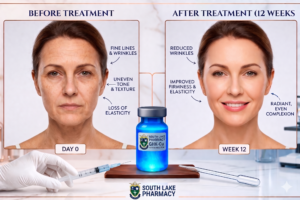
A landmark double-blind clinical study published in Skin Pharmacology and Physiology found that patients using GHK-Cu-containing formulations showed significant improvements in skin density, thickness, and firmness over a 12-week period compared to placebo controls.
Before And After Results
2. Wound Healing and Tissue Repair
GHK-Cu’s role in wound healing was one of the earliest areas of research and remains one of its most robust applications. It accelerates all three phases of wound healing — inflammatory, proliferative, and remodeling — by coordinating the cellular events that close wounds, restore tissue architecture, and minimize scarring.
- Accelerates wound closure and re-epithelialization
- Promotes angiogenesis (new blood vessel formation) for improved tissue perfusion
- Reduces chronic inflammation that impairs wound progression
- Stimulates production of matrix metalloproteinases (MMPs) for orderly tissue remodeling
- Decreases scar formation by improving the organization of newly deposited collagen
- Shown effective in chronic, non-healing wounds such as diabetic ulcers
- Supports post-surgical healing and recovery
3. Hair Growth and Follicle Restoration
One of the most sought-after applications of GHK-Cu in the peptide therapy space is its ability to stimulate hair follicle activity and promote hair regrowth. The peptide appears to enlarge hair follicles, extend the anagen (growth) phase of the hair cycle, and counteract follicle miniaturization — the hallmark of androgenetic alopecia.
- Stimulates hair follicle proliferation and dermal papilla activity
- Enlarges miniaturized follicles in pattern hair loss
- Extends the anagen (active growth) phase of the hair cycle
- Improves scalp circulation and follicle oxygenation via VEGF upregulation
- Reduces scalp inflammation, a contributing factor to hair loss
- Studied as a potential standalone and adjunct therapy for androgenetic alopecia
- Compatible with other hair restoration protocols including minoxidil and finasteride
4. Anti-Inflammatory and Immune Modulation
Chronic low-grade inflammation is now recognized as a primary driver of biological aging — often described as “inflammaging.” GHK-Cu exerts potent anti-inflammatory effects that operate at the gene expression level, making it relevant not only for skin and wound care but for systemic health and longevity-focused protocols.
- Downregulates NF-κB, the master regulator of inflammatory gene transcription
- Reduces expression of TNF-α, IL-1β, and IL-6 — key pro-inflammatory cytokines
- Modulates the complement system and acute phase response
- Supports resolution of chronic inflammatory states that impair tissue function
- May benefit conditions driven by systemic inflammation such as metabolic syndrome and COPD
- Shown to reduce oxidative stress markers in preclinical models
5. Neuroprotection and Cognitive Support
Emerging research positions GHK-Cu as a potentially valuable neuroprotective agent. By upregulating BDNF and NGF, modulating oxidative stress in neural tissue, and reducing neuroinflammation, GHK-Cu may support cognitive health, particularly in the context of aging-related cognitive decline.
- Upregulates BDNF — critical for synaptic plasticity, learning, and memory
- Upregulates NGF — supports the health and survival of cholinergic neurons
- Reduces neuroinflammatory markers associated with neurodegenerative conditions
- Preclinical studies show protective effects against beta-amyloid toxicity
- May support mood regulation through neurotrophic factor modulation
- Under investigation as an adjunct in protocols targeting cognitive longevity
6. Lung and Respiratory Protection
A lesser-known but compelling area of GHK-Cu research involves its protective effects on lung tissue. Studies have demonstrated that GHK-Cu can reverse gene expression patterns associated with emphysema, COPD, and pulmonary fibrosis — conditions characterized by accelerated connective tissue breakdown and chronic inflammation.
- Reverses emphysema-associated gene expression patterns in preclinical models
- Reduces lung inflammation and fibrosis markers
- Upregulates antioxidant genes that protect against oxidative lung damage
- May play a role in recovery protocols following respiratory illness
7. Anticancer Gene Regulation
Preclinical research has identified a compelling pattern: GHK-Cu appears to reset gene expression profiles associated with aggressive cancer biology toward more normalized, healthy tissue profiles. This includes downregulation of oncogenes and upregulation of tumor suppressor pathways. Importantly, this research is preclinical and does not suggest GHK-Cu is a cancer treatment — but it adds to the picture of a molecule with broad-spectrum biological normalization effects.
Compound GHK-Cu at South Lake Pharmacy We work directly with your prescribing provider to prepare your GHK-Cu compound to the exact specifications of your protocol. Our licensed pharmacists are available to answer your questions. |
GHK-Cu Peptide Injection Dosage: Protocols and Considerations
Disclaimer: Dosage information below is provided for educational purposes only. GHK-Cu is a prescription compound. All dosing decisions must be made in consultation with a licensed healthcare provider who can evaluate your individual health history, goals, and risk factors. South Lake Pharmacy compounds GHK-Cu only with a valid prescription.
GHK-Cu peptide injection dosing is not universally standardized, as clinical protocols vary based on the therapeutic indication, patient profile, and prescribing physician’s judgment. However, common reference ranges have emerged from clinical practice and ongoing research.
Common GHK-Cu Injectable Dosing Ranges
- Typical dose range: 1 mg to 3 mg per injection
- Frequency: Once daily to five times per week, depending on the protocol
- Administration route: Subcutaneous (SubQ) injection, commonly in the abdomen or outer thigh
- Cycle length: Typically 4–12 weeks, with rest periods between cycles
- Reconstitution: Compounded as a lyophilized powder requiring reconstitution with bacteriostatic water prior to injection
- Storage: Reconstituted solution should be refrigerated at 2–8°C and used within the provider-specified window
Dosing by Indication
While protocols vary by provider, the following general patterns appear in clinical practice:
- Skin rejuvenation: 1–2 mg/day SubQ, 5 days per week for 6–12 weeks
- Hair restoration: 1–2 mg/day SubQ, often combined with other hair loss treatments
- Wound healing and tissue repair: Higher-end dosing (up to 3 mg) at provider discretion, often for shorter intensive cycles
- Anti-aging and longevity: Maintenance dosing at 1 mg/day, 3–5 times per week in cycling protocols
- Neurological and cognitive support: Emerging protocols vary; provider supervision is especially important
Combination Protocols
GHK-Cu is frequently used in combination with other peptides and compounds for synergistic effects. Common pairings in clinical practice include:
- GHK-Cu + Sermorelin/Ipamorelin: Anti-aging stacks targeting growth hormone optimization alongside cellular repair
- GHK-Cu + Minoxidil or Finasteride: For hair restoration protocols
Your prescribing provider will determine whether a combination protocol is appropriate based on your health history and treatment objectives. South Lake Pharmacy can compound multiple peptides and prepare them per your provider’s prescription.
GHK-Cu Peptide Side Effects: What to Know Before Starting
GHK-Cu has a well-established safety profile built over decades of research and clinical use. Its naturally occurring status and endogenous origins mean it is generally considered to have a low risk of significant adverse effects when used at therapeutic doses. However, as with any injectable peptide compound, awareness of potential side effects is important before beginning therapy.
Most Commonly Reported Side Effects
- Injection site reactions: Mild redness, swelling, or discomfort at the injection site — the most commonly reported effect and typically transient
- Temporary skin changes: Some users notice mild flushing or temporary skin discoloration near injection sites
- Nausea: Rare and typically mild when it occurs; often associated with higher doses
- Fatigue: Reported by a small subset of users, usually early in a new cycle
- Headache: Infrequently reported, typically resolving without intervention
Theoretical Risks and Considerations
- Copper accumulation: Because GHK-Cu delivers copper to tissues, theoretical concern exists around long-term use in individuals with copper metabolism disorders (e.g., Wilson’s disease). Patients with known copper processing issues should discuss this with their provider.
- Growth promotion: GHK-Cu’s ability to stimulate cell proliferation warrants caution in individuals with active cancer or a strong family history of hormone-sensitive cancers. Provider screening is essential.
- Drug interactions: No significant drug interactions have been formally identified, but your prescribing provider should review your full medication list before initiating therapy.
- Pregnancy and breastfeeding: Insufficient safety data exists for use during pregnancy or lactation. GHK-Cu should not be used in these populations without explicit medical guidance.
Minimizing Side Effect Risk
- Work with a qualified healthcare provider who can monitor your labs and clinical response
- Source GHK-Cu exclusively from licensed, accredited compounding pharmacies like South Lake Pharmacy
- Follow proper injection technique to minimize site reactions
- Rotate injection sites with each administration
- Start at the lower end of the dosing range and titrate as tolerated under provider guidance
- Report any unexpected symptoms to your provider promptly
GHK-Cu Topical vs. Injectable: What’s the Difference?
GHK-Cu is available in multiple delivery forms, each with distinct advantages and appropriate use cases. Understanding the differences helps patients and providers select the right delivery route for their specific therapeutic goals.
| Delivery Route | Best For | Key Considerations |
| Topical Serum/Cream | Localized skin rejuvenation, cosmetic anti-aging, scalp application for hair loss | Limited systemic absorption; penetration varies with skin barrier integrity; no injection required |
| Subcutaneous Injection | Systemic anti-aging, wound healing, inflammation, hair and skin from the inside out, cognitive support | Requires prescription; higher bioavailability; broader systemic effects; consistent dosing |
| Intranasal | Neuroprotective and cognitive applications; delivery to CNS via olfactory route | Emerging delivery method; used in research settings; requires specialized compounding |
For patients seeking systemic therapeutic effects — including whole-body anti-aging, inflammatory modulation, hair and skin regeneration, and cognitive support — subcutaneous injection typically offers superior bioavailability and more consistent outcomes compared to topical application alone. Many comprehensive protocols combine both modalities.
Who Is a Good Candidate for GHK-Cu Peptide Therapy?
GHK-Cu therapy is relevant across a broad range of patient profiles. While individual candidacy is always determined by a qualified medical provider, the following populations tend to be among those most interested in and appropriate for GHK-Cu peptide protocols:
- Adults over 40 experiencing visible signs of skin aging, declining skin density, or hair thinning related to age-associated collagen loss
- Individuals with slow-healing wounds such as surgical incisions, sports injuries, or chronic skin conditions
- Patients with androgenetic alopecia (male or female pattern hair loss) seeking adjunctive therapies
- Longevity-focused individuals working with functional medicine or anti-aging providers on comprehensive health optimization protocols
- Athletes and active adults looking to support tissue repair and recovery
- Patients with chronic inflammatory conditions who have not achieved sufficient relief through conventional approaches alone
- Individuals interested in cognitive longevity in the context of a broader neuroprotective strategy
- Post-procedure patients (laser resurfacing, microneedling, surgery) looking to accelerate healing and improve outcomes
Who Should Avoid GHK-Cu?
- Individuals with active cancer or those in remission without oncologist approval
- Patients with Wilson’s disease or other copper metabolism disorders
- Pregnant or breastfeeding women without explicit medical clearance
- Children and adolescents unless prescribed under specific circumstances
- Anyone with a known allergy to any component of the formulation
Why Choose a Compounding Pharmacy for GHK-Cu?
GHK-Cu is not an FDA-approved pharmaceutical available off-the-shelf. As a compounded preparation, it is prepared by licensed pharmacists at accredited compounding facilities under strict quality controls. This distinction matters enormously — the source of your GHK-Cu directly determines its purity, potency, sterility, and ultimately its safety and effectiveness.
Risks of Unregulated Online Sources
- Products sold online as “research chemicals” are not intended for human use and are not subject to pharmacy quality standards
- No guarantee of actual peptide content, purity, or sterility
- Potential contamination with heavy metals, endotoxins, or microbial agents
- No licensed pharmacist oversight, prescription screening, or patient counseling
- No accountability structure if a product causes harm
What South Lake Pharmacy Provides
- Pharmaceutical-grade GHK-Cu sourced from licensed API suppliers
- USP 797/800 compliant sterile compounding practices
- Preparation by licensed, experienced compounding pharmacists
- Proper labeling, storage, and dispensing with full patient instructions
- Collaboration with your prescribing provider on formulation and dosage specifications
- Convenient service for patients throughout Florida, including Zephyrhills and the surrounding Pasco County area
- Prescription-only dispensing — ensuring each patient has appropriate medical supervision
Prescription GHK-Cu Compounded in Florida South Lake Pharmacy | SL Compounding | Zephyrhills, FL Serving patients and providers throughout Pasco County, the Tampa Bay area, and all of Florida with pharmaceutical-grade compounded peptides. |
GHK-Cu and the Science of Aging: A Deeper Look
The science of biological aging has moved well beyond the simplistic view of aging as inevitable, linear deterioration. Modern geroscience — the scientific study of the biology of aging — recognizes aging as a modifiable process driven by interconnected cellular hallmarks including genomic instability, telomere attrition, epigenetic alterations, loss of proteostasis, deregulated nutrient sensing, mitochondrial dysfunction, cellular senescence, stem cell exhaustion, and altered intercellular communication.
GHK-Cu sits at the intersection of multiple aging hallmarks. Its gene regulatory effects, antioxidant properties, anti-inflammatory signaling, and support for tissue repair collectively make it a molecule with genuine multi-hallmark aging relevance.
GHK-Cu and Epigenetic Aging
Among the most exciting emerging areas of GHK-Cu research is its potential influence on epigenetic aging — the process by which DNA methylation patterns shift over a lifetime in ways that predict biological (rather than chronological) age. Early research suggests that GHK-Cu may favorably influence the epigenetic marks associated with tissue aging, though human clinical trials specifically measuring epigenetic clock outcomes remain in early stages.
GHK-Cu and Cellular Senescence
Cellular senescence — the accumulation of dysfunctional cells that no longer divide but resist apoptosis and secrete pro-inflammatory factors (the SASP, or senescence-associated secretory phenotype) — is a key driver of tissue dysfunction with age. GHK-Cu’s anti-inflammatory and gene-regulatory properties may attenuate the SASP and modulate the tissue environment in which senescent cells operate, reducing their net negative impact.
Declining GHK-Cu Levels as an Aging Biomarker
The natural decline in circulating GHK-Cu with age is itself telling. When a molecule that the body uses to orchestrate tissue repair, collagen production, antioxidant defense, and inflammatory resolution declines by 60% or more over a lifetime, the downstream effects accumulate across virtually every organ and tissue system. Restoring more youthful GHK-Cu levels through therapeutic supplementation is the foundational rationale for its use in longevity and regenerative medicine protocols.
- At age 20: ~200 ng/mL plasma GHK-Cu
- At age 40: ~130 ng/mL plasma GHK-Cu (35% decline)
- At age 60: ~80 ng/mL plasma GHK-Cu (60% decline from peak)
- The slope of GHK-Cu decline closely parallels the emergence of visible aging signs and declining tissue repair capacity
How to Get GHK-Cu at South Lake Pharmacy
Getting started with compounded GHK-Cu at South Lake Pharmacy is a straightforward process that begins with a consultation with a licensed healthcare provider who can prescribe peptide therapy. Here is what the process typically looks like:
- Step 1 — Provider Consultation: Meet with a licensed physician, nurse practitioner, or other prescribing provider who specializes in or is experienced with peptide therapy. Discuss your health history, goals, and candidacy for GHK-Cu.
- Step 2 — Prescription: Your provider issues a prescription with the formulation, dose, and frequency specifications appropriate for your protocol.
- Step 3 — Pharmacy Order: Your prescription is sent to South Lake Pharmacy / SL Compounding. Our pharmacists review the prescription and begin compounding your personalized preparation.
- Step 4 — Compounding and Quality Check: Your GHK-Cu compound is prepared under USP 797-compliant sterile conditions by our licensed compounding pharmacists.
- Step 5 — Dispensing: Your compounded GHK-Cu is dispensed with complete patient instructions, proper storage guidance, and pharmacist availability for any questions.
- Step 6 — Ongoing Monitoring: Your provider monitors your progress and adjusts your protocol as needed. Regular check-ins ensure you are achieving your goals safely.
Frequently Asked Questions About GHK-Cu Peptide Injection
Is GHK-Cu FDA-approved?
GHK-Cu is not an FDA-approved drug for any specific indication. It is compounded by licensed compounding pharmacies under the regulatory framework governing compounding practice. All compounded preparations at South Lake Pharmacy are prepared in compliance with applicable state and federal pharmacy laws and USP compounding standards.
How long does it take to see results from GHK-Cu injection?
Results vary by indication and individual response. Many patients report improved skin texture and hydration within 3–4 weeks of initiating injectable therapy. More substantial changes in collagen density, wrinkle reduction, or hair growth typically emerge over a 6–12 week course. Systemic effects such as improved energy, reduced inflammation-related symptoms, and enhanced recovery may be noticed earlier in some individuals.
Can I use GHK-Cu topically and by injection at the same time?
Yes. Many providers recommend combining topical and injectable GHK-Cu for patients with both localized cosmetic goals and systemic therapeutic objectives. The routes of administration are complementary — topical application provides direct skin surface contact while injectable therapy delivers systemic effects via circulation. Your provider will guide the appropriate combination strategy for your individual goals.
Do I need a prescription for GHK-Cu?
Yes. Compounded injectable GHK-Cu requires a valid prescription from a licensed healthcare provider. South Lake Pharmacy does not dispense peptide compounds without a prescription. This requirement exists to ensure every patient receives appropriate medical screening, a tailored dosing protocol, and ongoing monitoring by a qualified provider — which is fundamental to safe and effective peptide therapy.
Does GHK-Cu need to be refrigerated?
Yes. Reconstituted GHK-Cu should be stored at refrigerator temperature (2–8°C / 36–46°F) and kept away from light. Lyophilized (freeze-dried) GHK-Cu powder prior to reconstitution may be stored at room temperature for short periods, but your pharmacy-specific storage instructions should always take precedence. South Lake Pharmacy provides complete storage guidance with every dispensed compound.
Is GHK-Cu safe for long-term use?
GHK-Cu has a well-established safety record across topical and injectable applications spanning several decades of research and use. Long-term injectable protocols are typically structured as cycling regimens — periods of active dosing followed by rest phases — to maintain sensitivity and minimize any theoretical risk of receptor desensitization or copper accumulation. Your provider will structure your protocol to optimize safety alongside efficacy.
What makes South Lake Pharmacy a trusted source for GHK-Cu?
South Lake Pharmacy / SL Compounding is a licensed Florida compounding pharmacy with deep expertise in specialty peptide compounding. We operate under USP 797/800 sterile compounding standards, source pharmaceutical-grade APIs from licensed suppliers, and maintain rigorous quality control processes. Our licensed pharmacists work collaboratively with prescribing providers to ensure each patient’s compound meets the exact specifications of their prescription. We are committed to patient safety, formulation quality, and personalized service.
Conclusion: GHK-Cu Peptide Therapy at South Lake Pharmacy
GHK-Cu peptide injection represents one of the most compelling therapeutic applications of modern peptide science. With over four decades of research supporting its role in skin rejuvenation, wound healing, hair restoration, anti-inflammation, neuroprotection, and systemic anti-aging — and a safety profile built on its origins as a naturally occurring human peptide — GHK-Cu has earned its place as a foundational molecule in functional and regenerative medicine.
As with any therapeutic peptide, the key to success lies in pharmaceutical-grade sourcing, appropriate medical supervision, and a protocol tailored to your individual health profile and goals. South Lake Pharmacy is proud to serve patients and providers throughout the Zephyrhills, FL area and across Florida with expertly compounded GHK-Cu preparations that meet the highest standards of quality and safety.
If you are working with a provider on a GHK-Cu protocol — or if you are a provider looking for a reliable compounding partner — we invite you to contact South Lake Pharmacy today. Our pharmacists are available to answer your questions, discuss formulation options, and help ensure your patients receive the highest quality compounded peptide preparations available.
South Lake Pharmacy | SL Compounding Zephyrhills, FL | Serving All of Florida Pharmaceutical-grade compounded GHK-Cu and specialty peptides prepared by licensed pharmacists. Prescription required.
|